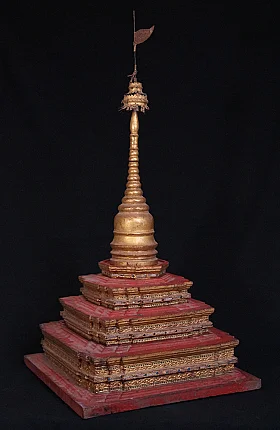
Ancient Vihara: Buddhist architectures

Generally, Vihara refers to the Buddhist bhikkhu monastery. It is the living quarters for bhikkhu with an open shared space or courtyard. In Indian architecture, especially ancient Indian rock-cut architecture, Vihara has a more specific meaning. In these type of architecture, Vihara means a central hall equipped with small cells at the side of the hall. These cells sometimes include beds carved from the stone. Some of these halls are equipped with a shrine cell housing Buddha statues at the back wall. These shrines are also observed with housing stupa in the early days. Earliest examples of Vihara can be seen in sites like Ajanta Caves, Aurangabad Caves, Karli Caves, and Kanheri Caves.
Origin and historical accounts of ancient Vihara
It is recorded that Vihara was used as pleasure centers and monasteries. But the use of Vihara as a pleasure center changed as Emperor Ashoka changed his religion to Buddhism. It is believed that the Vihara as monasteries were firstly used in the form of caves. These caves date back to the centuries before the start of the common era. The rock-cut architecture found in cave viharas have roots in the Maurya Empire period. The group of residential cave monuments found in and around the Bihar state of India are believed to be from the pre-common era and are good examples of Mauryan architecture. As per the Buddhist and Jain texts, the Buddha, the Jain Tirthankaras or Sramana monks also lived in these caves. If these records hold truths then the cave residence traditions date back to at least the 5th century BCE.
Likewise, there are early viharas spread in the Indian subcontinent which were constructed at different intervals of time. In the western Deccan, there are earliest Buddhist rock-cut caves that house monks which date back to the 3rd century BCE. Some of these caves are Bhaja Caves, the Karla Caves, some parts of Ajanta Caves, etc. The cave at Nasik, Krishna Cave dates to about the 1st century BCE which has the central hall with connected cells. The caves found in the northwestern area of Gandhara- Jaulian, Kalawan, Dharmarajika- are believed to date about 2nd century CE. These Viharas house central shrine containing the Buddha statue.
Architectural features of ancient viharas
The architectural features of ancient vihara constructed with stone or brick are somewhat the same everywhere. But those constructed after the 2nd century BCE has a standard plan. This plan consists of the roughly square rectangular hall which is normally added with small cells at the side of the wall. These cells are often fitted with beds and pillows. The hall had one or more entrances often equipped with a verandah. On the back wall, there is attached with a small shrine. Initially, this shrine room housed the stupa but later larger Buddha statues were installed. The walls of the hall are also equipped with reliefs. Regarding the verandah, it might also contain the sculpture.
Even though the standard plan is mentioned, there are some variants in the rock-cut viharas. Like in the two vihara halls of cave 5 at Ellora and cave 11 at Kanheri, they have very low platforms which run most of the length of the main hall. Cave 11 at the Bedse Caves is found to be fairly small. This cave is equipped with nine cells inside the hall, and four cells around the entrance. The hall doesn't equip with the shrine room.
Note: Apart from maintaining the blog on Buddha and Buddhism, we also manage huge collection of various period and regional Buddhist arts in our Buddha shop in the Netherlands and also showcased it in our online Buddha statues gallery. Please feel free to visit and know more about the Buddha statues.
Share this page